Introduction: When Oil Becomes Strategy, Not Commodity
Energy has rarely been just an economic resource; at decisive moments in history, it has functioned as a lever of power capable of reshaping the global order. The 1973 Oil Crisis stands as one of the clearest examples of this reality, when oil-producing states transformed supply into a geopolitical weapon and forced a strategic recalibration among major powers. Today, as conflict once again engulfs the Middle East and oil markets react with volatility, a familiar pattern appears to be resurfacing. Yet beneath the surface similarities lies a far more complex transformation—one that signals not a repetition of history, but the emergence of a fundamentally different global system.
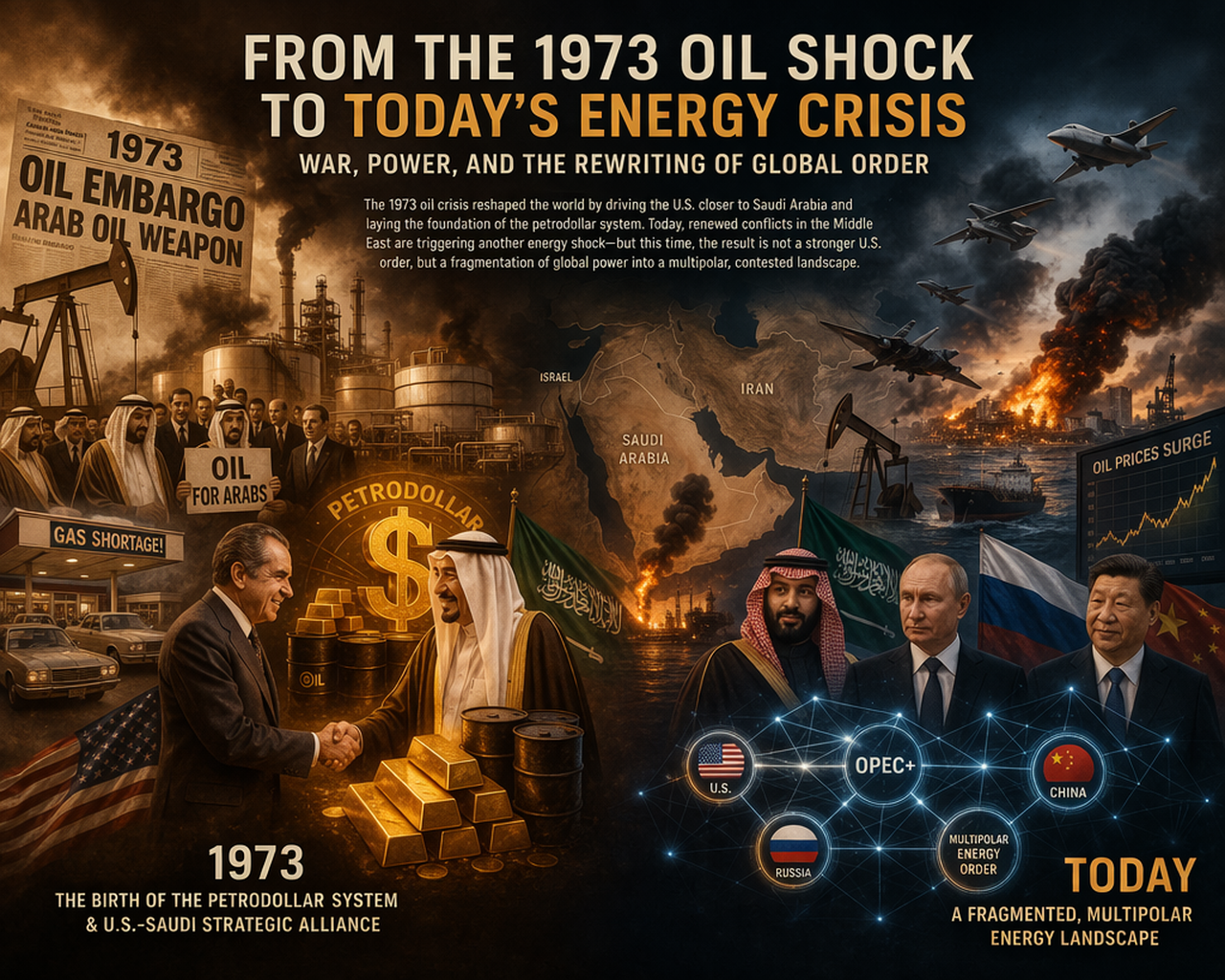
This article argues that while both the 1973 crisis and today’s energy instability are driven by war and strategic maneuvering, the earlier episode consolidated a US-led global order, whereas the present crisis is accelerating its fragmentation into a multipolar and contested landscape.
1973: War, Oil, and the Foundation of a Strategic Alliance
The origins of the 1973 oil shock are inseparable from the Yom Kippur War, a conflict that triggered a coordinated response by Arab oil producers. Members of OPEC imposed an embargo on countries perceived to be supporting Israel, most notably the United States. This was not merely an economic decision but a calculated geopolitical act designed to exert pressure through energy dependency.
The American response to this crisis was swift and transformative. Recognizing the strategic vulnerability exposed by the embargo, Washington moved decisively to strengthen its relationship with Saudi Arabia, elevating it from a regional partner to a central pillar of global energy security. This partnership extended beyond oil supply into financial and security arrangements that would underpin the emerging global order. The resulting system, often described as the petrodollar framework, ensured that oil transactions were closely tied to US financial dominance.
What emerged from the crisis was a paradox: while oil producers had demonstrated their ability to challenge Western power, the long-term outcome ultimately strengthened the United States by institutionalizing its role as the guarantor of global energy stability. The 1973 crisis, therefore, did not dismantle the existing order; it reconfigured and consolidated it.
The Present Crisis: War Without a Single Center of Gravity
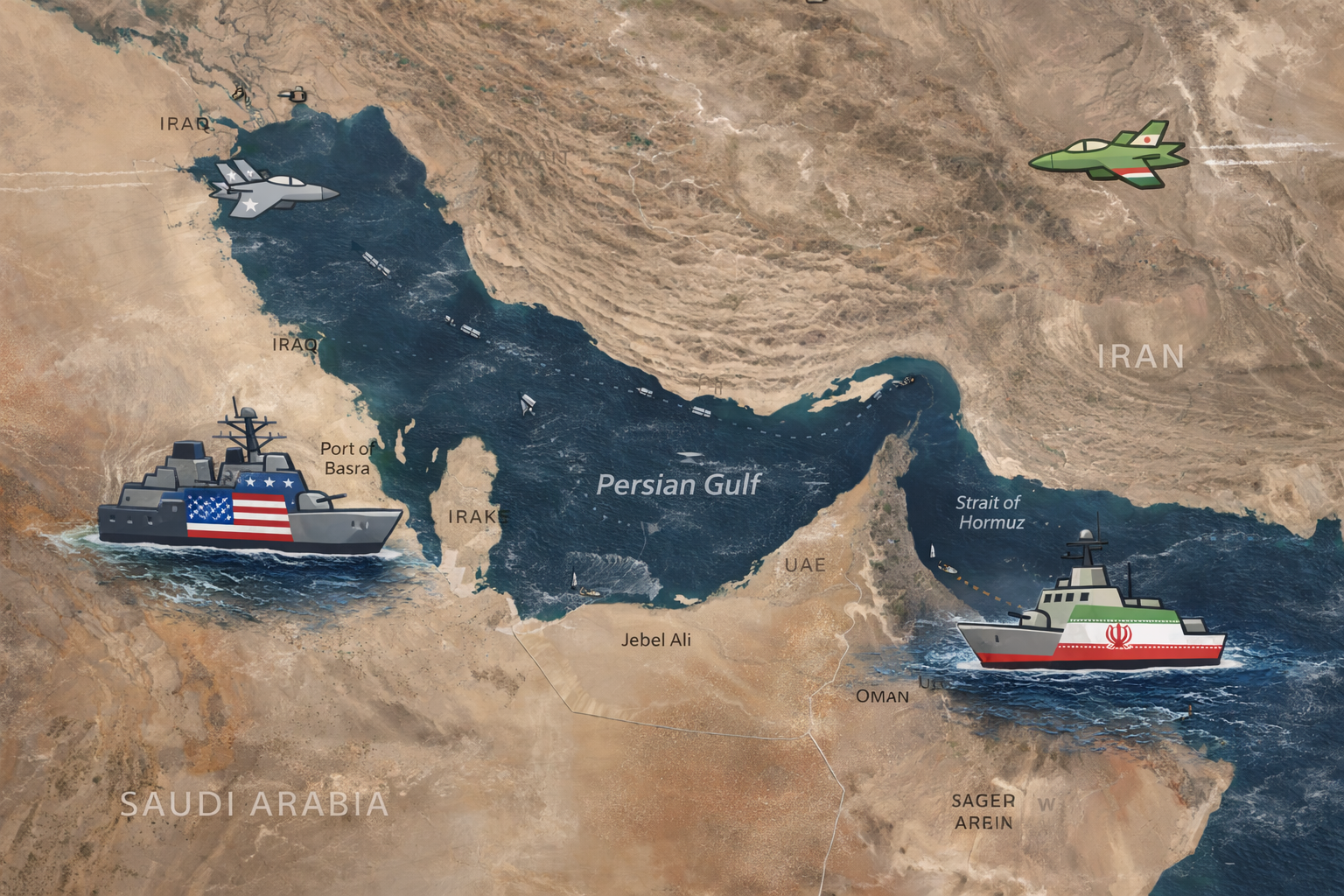
In contrast, the current wave of energy instability is unfolding in a geopolitical environment that is far less centralized and far more unpredictable. Renewed tensions across the Middle East, particularly involving Iran, Israel, and their respective networks of influence, have once again brought the region to the forefront of global energy concerns. However, unlike in 1973, the crisis is not defined by a single coordinated action such as an embargo. Instead, it is shaped by overlapping conflicts, strategic rivalries, and the constant risk of escalation.
The structure of the global energy system has also changed significantly. The United States, once heavily dependent on Middle Eastern oil, has transformed into a major energy producer, altering its strategic calculus. At the same time, China has emerged as the world’s largest importer of energy, making it deeply invested in the stability of Gulf supply routes. This shift has redistributed the stakes of Middle Eastern stability, turning it into a global concern.
The evolution of OPEC+, which now includes major producers like Russia, further illustrates this transformation. It reflects a world in which energy decisions are increasingly intertwined with broader geopolitical competition, rather than being anchored to a single dominant power.
Continuity and Change: Echoes of the Past, Signals of the Future
Despite these differences, the parallels between 1973 and the present remain striking. In both cases, conflict in the Middle East serves as the catalyst for global energy disruption, reminding the world that the region’s strategic importance has not diminished. Oil continues to function as a tool of influence, whether through deliberate supply decisions or the indirect effects of instability.
Yet it is precisely in the differences that the significance of the current moment becomes clear. The 1973 crisis unfolded in a world where power was relatively concentrated, allowing the United States to respond in a way that ultimately reinforced its leadership. Today, power is far more diffuse, and no single actor possesses the capacity to impose a comparable level of order on the system.
This diffusion is reflected in the behavior of key players, particularly Saudi Arabia, which has adopted a more independent and flexible approach to its foreign policy. Rather than aligning exclusively with Washington, it now balances relationships with multiple global powers in pursuit of strategic autonomy.
A Structural Transformation in Motion
What distinguishes the present crisis most clearly from its historical predecessor is the context of a broader structural transition. The global energy system is no longer defined solely by the dynamics of oil supply and demand; it is increasingly shaped by technological change, environmental considerations, and strategic competition between major powers.
The push toward renewable energy introduces a new dimension to energy geopolitics, complicating the role of traditional producers and altering long-term expectations. At the same time, the interconnected nature of the modern global economy has created new forms of vulnerability, where disruptions ripple across supply chains and industries worldwide.
Conclusion: From Consolidation to Fragmentation
The comparison between the 1973 Oil Crisis and today’s energy turmoil reveals a fundamental shift in the nature of global order. The earlier crisis ultimately contributed to the consolidation of a US-led system characterized by relatively stable alliances and predictable structures. The current moment, by contrast, is defined by fragmentation, competition, and uncertainty.
Rather than reinforcing a single center of power, today’s energy geopolitics is dispersing influence across multiple actors, each pursuing its own interests within an increasingly contested environment. This transformation suggests the emergence of a new kind of global order—one that is less hierarchical, more fluid, and inherently less predictable.
While history offers valuable insights, it does not provide a blueprint. The world is not reliving 1973; it is moving beyond it, into a new era where energy, war, and power intersect in ways that are still unfolding.