Juvenile Justice System in Pakistan: Legal and International Perspectives
Introduction
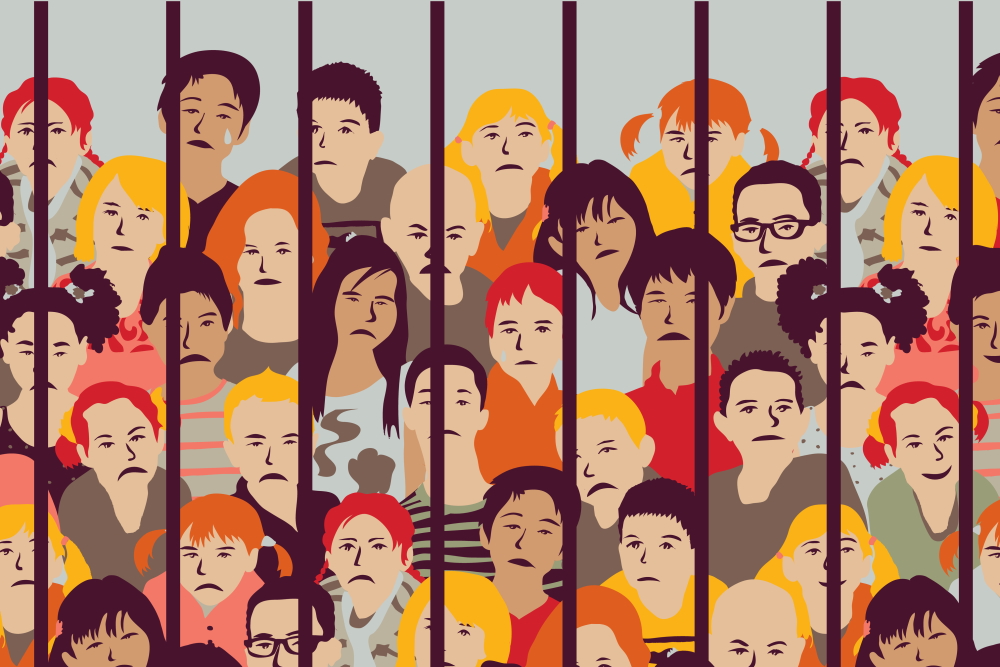
The concept of juvenile justice represents a society’s moral, constitutional, and legal commitment to protect children who come into conflict with the law, while simultaneously recognizing their psychological immaturity and inherent capacity for reform. Modern jurisprudence no longer treats children as miniature adults; rather, juvenile delinquency is understood as a complex social phenomenon shaped by poverty, family disintegration, lack of education, social exclusion, and exposure to violence. Pakistan, like many developing states, faces significant structural and institutional challenges in operationalizing juvenile justice despite possessing a comparatively progressive statutory framework. A comparison with international legal standards reveals both legislative convergence and persistent implementation gaps in ensuring a genuinely child-centered justice system.
Meaning and Concept of a Juvenile
A juvenile is generally understood as a person who has not attained the age of majority and is therefore presumed to lack full criminal responsibility. Under international law, particularly the United Nations Convention on the Rights of the Child, a child is defined as any person below the age of eighteen years. Pakistani law adopts the same definition. The Juvenile Justice System Act, 2018 explicitly defines a juvenile as a person who has not completed eighteen years of age at the time of commission of an offence. This definition is legally significant because it shifts the focus of criminal justice away from punishment and toward rehabilitation, reintegration, and the recognition of evolving capacities.
Criminological research, including studies conducted by the United Nations Office on Drugs and Crime, emphasizes that juveniles possess a heightened capacity for reform due to ongoing cognitive, emotional, and moral development. Consequently, juvenile offenders are treated as a distinct legal category requiring specialized procedures, safeguards, and rehabilitative interventions, rather than exposure to the punitive framework of the adult criminal justice system.
Evolution of the Juvenile Justice System in Pakistan
The juvenile justice framework in Pakistan evolved gradually, largely influenced by constitutional jurisprudence and international human rights obligations. Prior to 2000, children were often tried under ordinary criminal courts, resulting in severe miscarriages of justice, including corporal punishment and death sentences. The promulgation of the Juvenile Justice System Ordinance, 2000 marked the first serious legislative attempt to separate juveniles from adult offenders. However, weak enforcement, lack of institutional support, and ambiguity in age determination limited its effectiveness.
In response to these deficiencies, the legislature enacted the Juvenile Justice System Act, 2018. This statute strengthened procedural safeguards, formalized diversion mechanisms, improved age determination procedures, abolished capital and corporal punishment for juveniles, and reaffirmed rehabilitation as the central objective of juvenile justice. The Act represents a major alignment with global child rights norms, although its success ultimately depends on effective implementation.
Juvenile Justice in Pakistan: Social Practices and Ground Realities
Despite legal reform, prevailing social practices continue to undermine juvenile justice in Pakistan. Structural poverty, illiteracy, child labor, domestic abuse, and urban marginalization significantly contribute to juvenile offending. Many children enter the criminal justice system due to survival-based offences rather than inherent criminality. Empirical studies conducted by the Society for the Protection of the Rights of the Child indicate that the majority of incarcerated juveniles belong to economically disadvantaged backgrounds and are charged with minor, non-violent offences.
Institutional attitudes further compound the problem. Law enforcement agencies frequently treat juveniles as hardened criminals, subjecting them to torture, unlawful detention, and procedural violations. Weak birth registration systems and lack of identity documentation often result in juveniles being misclassified as adults. Reports by Human Rights Watch consistently highlight the incarceration of juveniles in adult prisons, exposing them to abuse, criminal networks, and psychological trauma, thereby defeating rehabilitative goals.
Constitutional Protection of Juveniles in Pakistan
Although the Constitution of Pakistan does not expressly reference juveniles, it provides a robust normative framework for their protection. Article 9 guarantees the right to life and liberty, encompassing freedom from torture and inhuman treatment. Article 10A ensures the right to a fair trial, which applies equally to juvenile offenders. Article 11 prohibits slavery, forced labor, and child labor, addressing socio-economic conditions that contribute to juvenile crime. Article 25 guarantees equality before law while permitting reasonable classification, thereby constitutionally justifying differentiated treatment for juveniles.
Judicial interpretation has reinforced these protections. In Muhammad Abbas vs State, the Supreme Court commuted a death sentence upon establishing juvenile status, affirming that constitutional guarantees prevail over procedural deficiencies. Similarly, in Salman Akram Raja vs Government of Punjab, the Lahore High Court emphasized the obligation of courts to ensure accurate age determination and to extend the benefit of doubt in favor of the accused child.
Salient Features of the Juvenile Justice System Act, 2018
The Juvenile Justice System Act, 2018 institutionalizes a child-sensitive model of criminal justice. It mandates the establishment of juvenile courts, guarantees legal representation, ensures confidentiality of proceedings, and introduces diversionary mechanisms such as mediation, probation, and counseling. The Act categorizes offences into minor, major, and heinous categories, while retaining rehabilitation as the overarching objective across all classifications.
The Act expressly prohibits death penalty, life imprisonment, and corporal punishment for juveniles, aligning domestic law with international human rights norms. It also assigns a critical role to probation officers and social welfare departments in assisting courts through social investigation reports. Nonetheless, empirical assessments reveal that insufficient training, staffing shortages, and budgetary constraints significantly limit effective enforcement.
International Approaches to Juvenile Justice
Globally, juvenile justice systems increasingly adhere to the principle that deprivation of liberty should be a measure of last resort and for the shortest possible period. Restorative justice models emphasizing accountability, reconciliation, and social reintegration dominate contemporary practice. Scandinavian jurisdictions, for example, rely heavily on counseling, educational continuity, and family-based interventions, resulting in consistently low juvenile recidivism rates.
In common law jurisdictions, judicial intervention has played a transformative role. The United States Supreme Court, in Roper v. Simmons and Miller v. Alabama, categorically prohibited capital punishment and mandatory life imprisonment without parole for juveniles, acknowledging diminished culpability and heightened reform potential. These decisions have significantly influenced global juvenile justice discourse.
International Legal Instruments on Juvenile Justice
The United Nations Convention on the Rights of the Child constitutes the foundational framework for juvenile justice worldwide. Articles 37 and 40 prohibit torture, capital punishment, and arbitrary detention, while mandating dignity, fair trial guarantees, and reintegration. Pakistan, as a state party, bears binding obligations under the Convention.
Supplementary instruments include the United Nations Standard Minimum Rules for the Administration of Juvenile Justice, known as the Beijing Rules, which outline procedural safeguards, and the Riyadh Guidelines, which focus on delinquency prevention through socio-economic policy. The Havana Rules regulate conditions of detention for juveniles deprived of liberty. Collectively, these instruments promote a holistic, preventive, and rights-based juvenile justice framework.
Comparative Analysis: Pakistan and the International Community
While Pakistan’s legislative framework substantially reflects international standards, enforcement remains comparatively weak. Institutional inertia, lack of coordination, social stigma, and inadequate professional training impede effective implementation. International experience demonstrates that early intervention, community-based rehabilitation, and robust child protection systems are far more effective than incarceration. Pakistan’s continued reliance on custodial measures contrasts sharply with global best practices.
Conclusion
Juvenile justice serves as a critical indicator of a legal system’s commitment to human dignity, constitutionalism, and social reform. Pakistan has made notable legislative and judicial progress, particularly through the Juvenile Justice System Act, 2018 and progressive constitutional interpretation. However, entrenched social practices, institutional weaknesses, and enforcement deficits continue to compromise juvenile rights. Comparative international experience confirms that juvenile crime is most effectively addressed through education, social welfare, and rehabilitation rather than punitive control. For Pakistan, the core challenge lies not in lawmaking but in transforming institutional culture and social attitudes to genuinely uphold the best interests of the child.
Admin “Compiled from legal sources and international standards”(For academic and educational use only)